Truly, I did not want to write about the fallist movement, as it has come to be known. A lot has been said, some rational, some alarmist, most of it with variously good discussion that variously alienates the actual protestors. But here I am. It feels to me, recently, that a lot of what was solid in my life has melted into piles of sand.
I point to the destruction of things I hold dear - some of it quite physical. The university, where I was hoping to find, no, where I have found, sanctuary, community and a meaningful life is literally burning.
Those that are not burning have secured their safety by locking down, fortress like, their boundaries. None may enter, at least, none that the university is intended to serve. Students are banned. Knowledge seekers are banned. Academics, admin staff, and security occupy campus so much more absolutely than the #feesmustfall protestors could ever have dreamed of.
The library stands empty, silent of breaths and heartbeats, the murmur of work and frustration and boiling brains that permeated it's floors.
How does one work in such absolute quiet?
Never mind that the requirements for entry into that sacred temple - formalised, permanent academic work - have increased year on year for nearly a decade now - all young academcis all over the world feel this pressure. Like Atalanta avoiding marriage, they have run ahead of us, and few are those with golden apples to slow her down enough to catch up. The effects of this burning of my place of worship means that entry for the young, inexperienced, the next generation of priests of knowledge, will effectively close even if they meet those Atalantian requirements. There is no money, they say. But really, there is no ritual of induction anymore, nor is there a temple in which to carry out these sacred rites. It has crumbled to a pile of sand.
Perhaps this more broadly talks to the implications of the fallist movement - that there are things that should have been solid, but in fact have turned out to be piles of sand. I don't much care what they say they want at this point. Whether it is about free education, or simply about anarchy, or about race... I doubt it matters overly much, and the name calling, superficial discussions and general riddicule on all sides seem to support this notion. What does matter, what no one seems to be speaking about, is the clear, immense, potent and persistent sense of failure, loss, and hopelessness amongst the fallists.
Many promises have been made. Yeah, we can blame the ANC government, but this is much broader than them - the apartheid people made these same promises, wrapped a bit differently. These promises are that your children (the fallists) will have better opportunities than you did. That your kids, through education, and yes, university education, will have dignified, comfortable, status-laden jobs that will pay well, feel meaningful, and accrue social capital. The promises guaranteed human dignity, that others will not look down upon you, that you will be seen not just for who you are, but as a symbol of the greatness of all that a human could be.
This is far from unique to South Africa, though our history has certainly given the resulting disappointment a particular flavour. Look at how we disparage millennials, who received a participation trophy for every activity, who were told, no, convinced, entranced, bewitched into the conviction that your dreams can be made solid through personal effort... or less than personal effort, through simply holding on to them tightly enough.
It's a hard lesson to learn that you are not, in fact, particularly special. That there are no dream jobs (and in all likelihood, that there are no jobs at all - unemployment is growing world wide). That no matter how hard you hold on to your dream, or, how hard you actually work (and statistically, millennials work numbers of hours last seen during the industrial revolution), your dreams will not come true. More to the point, that your work will keep on enriching, benefiting, others. Others who promised you dignity and equality yet you are still calling them 'sir'. Or, locally, 'boss'.
But alright, let us set aside the failed promises. Boo on them for being so naive, am I right? More direly, the fallist movement is pointing out a bunch of 'truths' that we are not talking about. Degrees might mean jobs, but the skills they teach you, well. That seems less certain. The piece of paper, for whom these fallists are willing to disrupt entire universities, seem to mean so much more to them than what they could have been learning in the mean time. And even that - the piece of paper may be worth more than any possible skills, but even so, it's not worth very much. Certainly not worth preserving the right of others to get it while protesting.
More basically, screaming, burning and shouting is the only way to be heard. Look, it's true, as every university has self-defensively pointed out, that they have been asking for more money every year for a decade now... but that has gotten us where, exactly? Even now, by refusing negotiations, the fallists are calling attention to the fact that these negotiations won't get them anywhere. It would be naive of me to think that these negotiations would accomplish much of anything, given that more powerful institutes (universities themselves) have not managed to achieve anything. No, we should not be fooled into thinking these guys don't know what they're doing.
In larger South African society, the repetitive strikes, especially around the mines and the service industry, underscores my point. A deep dissatisfaction remains, beyond salary numbers. There is no human dignity here.
Let me not further indulge in divisive strategy. These fallists? They are me. They are you. Even when you are not out there burning buildings. I can feel the frustration in my bones that things I believed, beyond belief, that I knew without a doubt were true - hard work leads to success, dreams are achievable, equality is possible, humans will always be heard and respected - are so clearly illusions. Piles of sand.
I'm not encouraging destruction. Far from it. I'm asking, what has already been destroyed, that was supposed to be solid, that makes this situation seem like the only alternative for so many?
Tuesday, 18 October 2016

Wednesday, 2 September 2015
The Talos Report
Talos here, reporting on the walk as it happened today, 1 September 2015.
Much like any other day, we were harnessed and ran to the gate barking and chasing. Leashed up we took the Guinea fowl route, Kira's favourite. We barked at He-who-stares, and we sniffed the pee-mail tree on the corner. Kira tried to mark it 'read', there was a minor miscommunication and I got marked read instead. Oh well, nothing a nice roll in the grass won't fix!
Some person with no respect for my majestic fawnness did not stop at the corner to watch us pass. We crossed after they had left. Such indignation. Still, quite forgivable, given the wonderful aroma that awaited us on the other side.
Nina said something that sounded like 'fertiliser'. She's wrong... it's poop! Glorious, glorious poop! Kira wasted no time and rolled to her hearts' delight. I can tell you the flavour was most excellent. Just the right age, about a week old, with a distinctly grass-fed bovine air to it. Soft, crumbly and nicely moistened by the kind hearted people who placed it on the grass for us to enjoy.
I guess it's due to the distracting nature of finding such a prize that neither Kira nor I noticed how Nina had completely changed colour. Her normal pinkish brown was replaced by a yellowy green. How odd! I wonder if this is normal, but I suspect the only way to tell is with more observation. I wonder if it's because she completely refused to join us?
After we had had our fill of merde de vache we rounded the corner to spot the flock of Guinea fowl strutting about right in the road. Two cocks and many hens, and even more chicks! Of course, Nina waits for us to look at her and sit before we all run after them, but that's no problem at all! Even Kira gets this right... took her long enough to learn it though.
You know the best thing about those spotted birds? They leave bits of feathers all over the place. I picked up a nice big one to carry home.
... That might have been a mistake, though. You see, my lovely trophy attracted He-who-fetches, a labrador out on an evening stroll much like us. He-who-fetches took my feather, he was friendly but firm in this matter. That's still tolerable, I am a generous Queen. The trouble is in taking my feather, he sniffed my head, which as we all know clearly marks me 'read'. Like any good pee-mail user, he felt obligated to indicate that he had also read the message. But he is no Kira, his font is enormous, bold, underline and in 72p.
So, friends, this concludes my report on todays walk, that was otherwise uneventful.
Signing off from the bath, where I'm now on my second round of shampoo,
Talos
ps. Kira was bathed first. Something about building up the emotional fortitude to deal with a sopping wet pug? Humans can be quite strange.
Much like any other day, we were harnessed and ran to the gate barking and chasing. Leashed up we took the Guinea fowl route, Kira's favourite. We barked at He-who-stares, and we sniffed the pee-mail tree on the corner. Kira tried to mark it 'read', there was a minor miscommunication and I got marked read instead. Oh well, nothing a nice roll in the grass won't fix!
Some person with no respect for my majestic fawnness did not stop at the corner to watch us pass. We crossed after they had left. Such indignation. Still, quite forgivable, given the wonderful aroma that awaited us on the other side.
Nina said something that sounded like 'fertiliser'. She's wrong... it's poop! Glorious, glorious poop! Kira wasted no time and rolled to her hearts' delight. I can tell you the flavour was most excellent. Just the right age, about a week old, with a distinctly grass-fed bovine air to it. Soft, crumbly and nicely moistened by the kind hearted people who placed it on the grass for us to enjoy.
I guess it's due to the distracting nature of finding such a prize that neither Kira nor I noticed how Nina had completely changed colour. Her normal pinkish brown was replaced by a yellowy green. How odd! I wonder if this is normal, but I suspect the only way to tell is with more observation. I wonder if it's because she completely refused to join us?
After we had had our fill of merde de vache we rounded the corner to spot the flock of Guinea fowl strutting about right in the road. Two cocks and many hens, and even more chicks! Of course, Nina waits for us to look at her and sit before we all run after them, but that's no problem at all! Even Kira gets this right... took her long enough to learn it though.
You know the best thing about those spotted birds? They leave bits of feathers all over the place. I picked up a nice big one to carry home.
... That might have been a mistake, though. You see, my lovely trophy attracted He-who-fetches, a labrador out on an evening stroll much like us. He-who-fetches took my feather, he was friendly but firm in this matter. That's still tolerable, I am a generous Queen. The trouble is in taking my feather, he sniffed my head, which as we all know clearly marks me 'read'. Like any good pee-mail user, he felt obligated to indicate that he had also read the message. But he is no Kira, his font is enormous, bold, underline and in 72p.
So, friends, this concludes my report on todays walk, that was otherwise uneventful.
Signing off from the bath, where I'm now on my second round of shampoo,
Talos
ps. Kira was bathed first. Something about building up the emotional fortitude to deal with a sopping wet pug? Humans can be quite strange.
Wednesday, 29 July 2015
The Competition
It was a glorious winter's day on the highveld. The sky was azure blue, the veld gold and crisp, and a cool wind kept our Fawn Maiden comfortable as she napped in the bright sunshine. All was peaceful. Except...
Her ear twitched. The wind carried sounds of an argument towards her.
"You're wrong! Small and agile is the best!"
"No, little one, it is you that are wrong. It is by far better to be big and strong."
The Fawn Maiden yawns as she opens her eyes.
"O, really? That big body could never keep up with me!"
"Yes, really! You may get there first, but those tiny teeth could never crush a bone!"
In front of her basking spot, her two friends stood arguing.
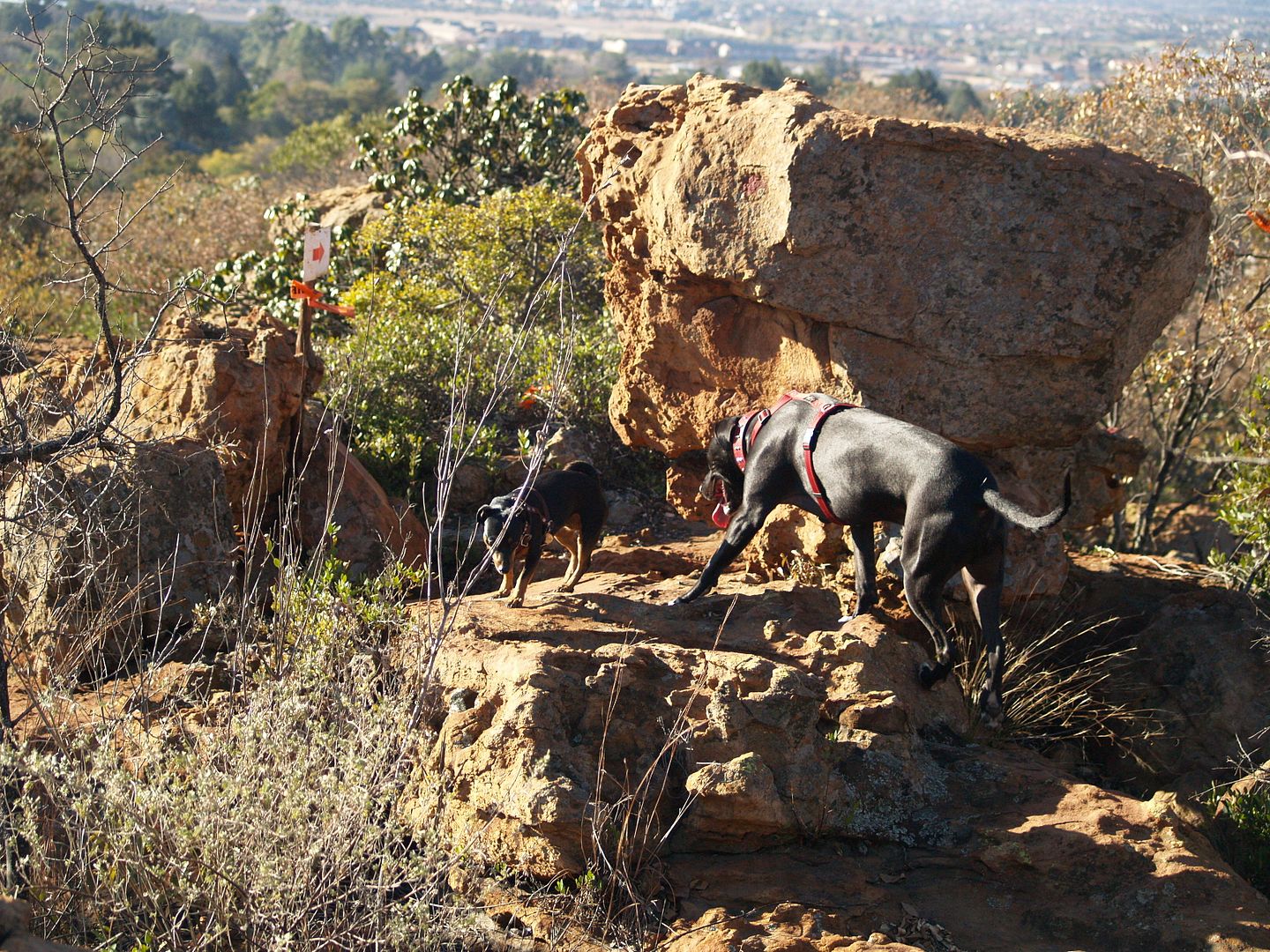
The Dusky Lady snapped: "well, come over here, and I'll show you tiny teeth!", to which the Loping Gent replied: "Ha! You could only nibble at my ankles!"
"Good morning!" said the Fawn Maiden.
Both black dogs turn to her with a start. They were so absorbed in their argument that they did not see her sleeping there.
"Say, Fawn Maiden, perhaps you can settle this for us?" asked the Loping Gent. "You see, I am convinced that it is better to be big and strong, while the Dusky Lady over here believes it is better to be small and agile. You are clever, and a good judge of character, help us out of this dilemma?"
"Yes, which of us is the better dog?" Asks the Dusky Lady.
"The better dog? My word, what a question. You both have your strengths, you are both excellent dogs!" the Fawn Maiden answered.
"That may be so, Fawn Maiden, but which of us is more excellent than the other?" pressed the Loping Gent.
"If you insist on finding an answer, Loping Gent, perhaps we should hold a contest. That would be more fair than simply relying on my say so."
Both the Dusky Lady and the Loping Gent agreed that that was a splendid idea, and so, the three friends set off to a place to test themselves.
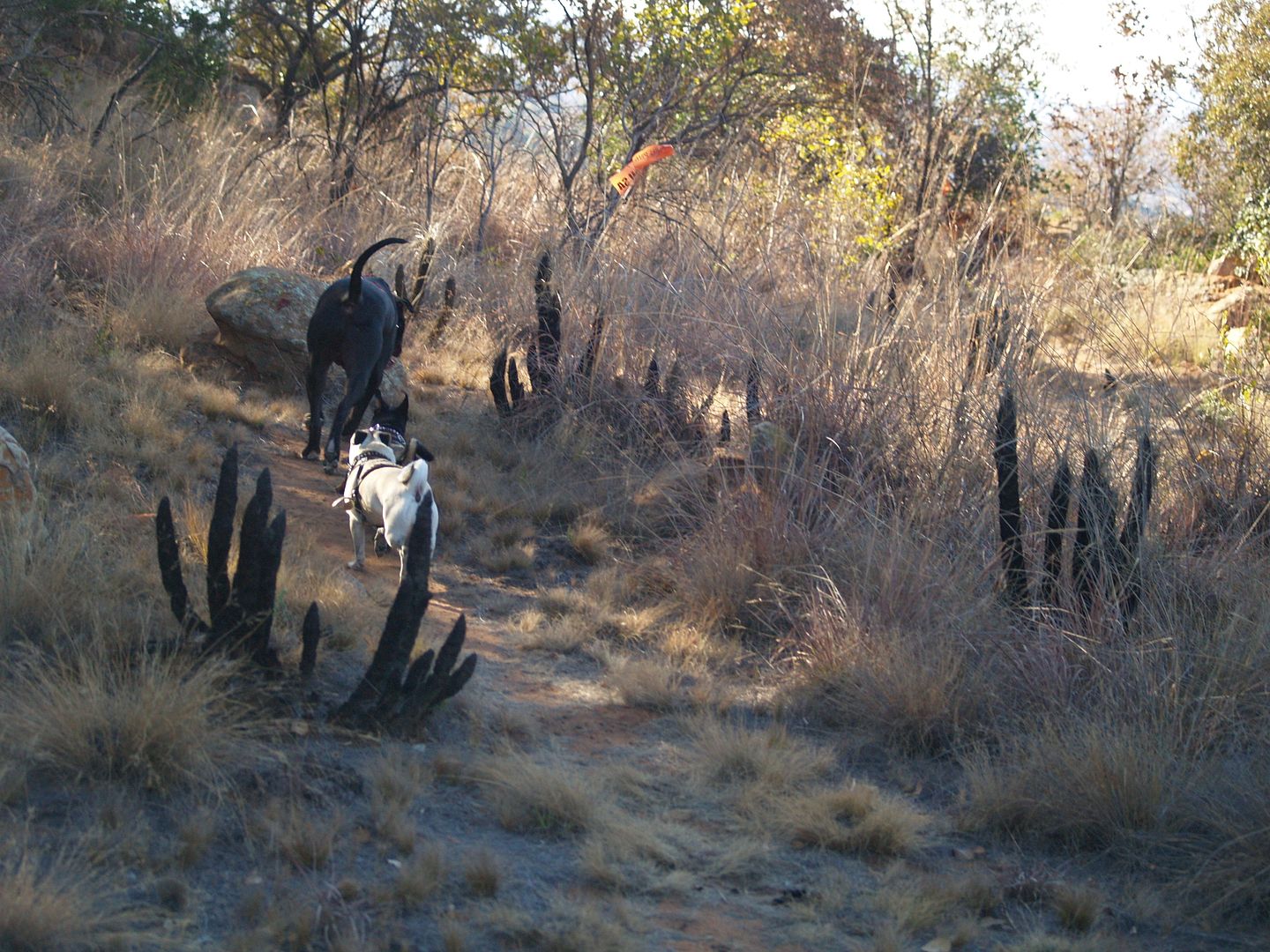
"There will be three contests. The first one," the Fawn Maiden explained "will be a test of speed. Whoever can make it to the top of this cliff first will be declared the winner of the first contest."
"Ha! I've got this one in the bag." said the Loping Gent. "I'll be up there in three big leaps."
The Dusky Lady scoffed. "You'll try, big guy, but those big feet of yours won't find anywhere to grip. Three big flops, right into the dust, more likely!"
The Fawn Maiden nimbly hopped up the cliff, using tiny footholds for small leaps, and larger surfaces for big leaps. She did not go too quickly, but took her time to make sure her footing was stable before she moved on. Once at the top, she told her companions that they may begin, and that she will check to see who makes it up to her first.
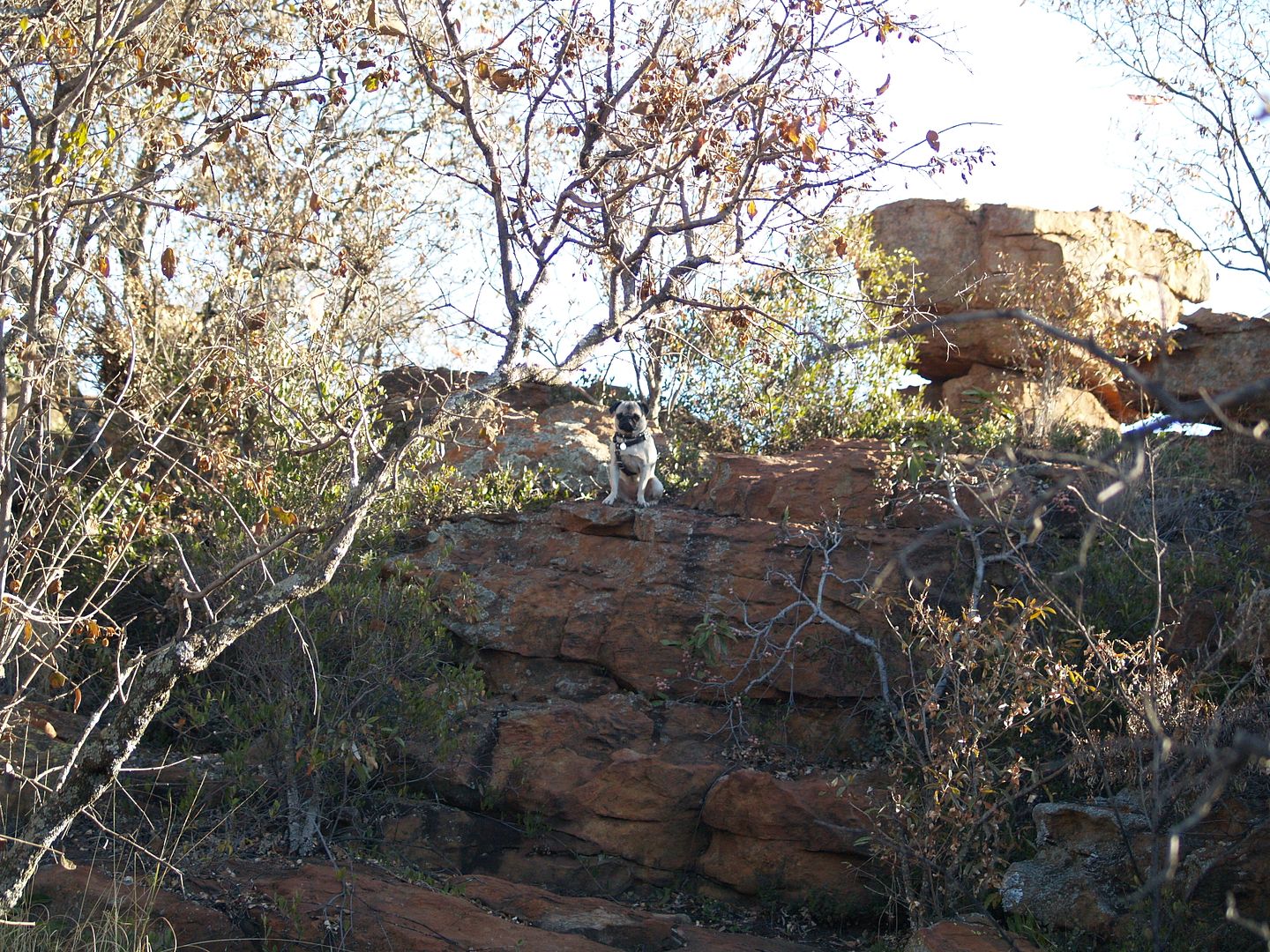
True to his word, the Loping Gent ran up to the cliff and made a gigantic leap, trying to get as much height as he can. He used all his might, his muscles first bunched then drawn taught, like a bowstring, as he flew through the air.
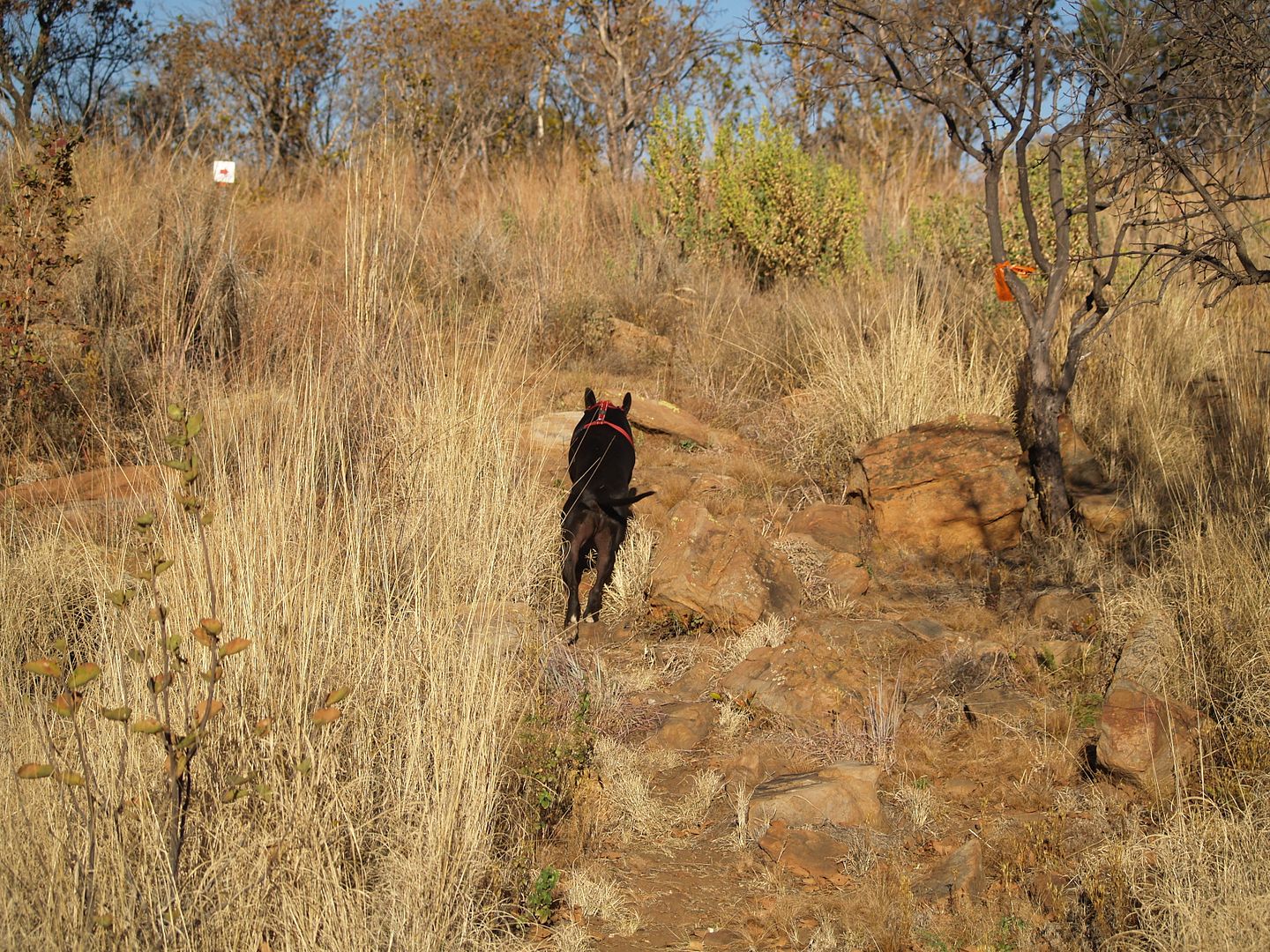
The Dusky Lady stormed the cliff, and scrabbled desperately up the sheer face. At his first leap, the Loping Gent was nearly half way up already! She dug in her nails and wiggled her legs and climbed and climbed with all her might. When the Loping Gent gathered himself for his second leap before she had even reached half way she thought all was lost, but he did not look before he leapt, and had nowhere to grip when he landed. His nails screeched as he tried for a foothold, but to no avail. He slid all the way down the cliff until he sat in the dust.
This gave the Dusky lady a chance to get ahead. As she neared the top she heard the Gent leap again, and she knew she had to hurry. In her rush she did not see that what she thought was rock, was in fact a small lizard sunning himself. The suddenly squishy surface under her paw alarmed her and she leapt back, landing just below where the Loping Gent had just landed.
"Ha!" He laughed, "I'll see you at the top!" and he leapt once more, with all his might. But her scrabbling was a better method for scaling cliffs, because as once more the Loping Gent slid to the sand below, she made it to the top.
"The Dusky Lady has won" called the Fawn Maiden loudly, and more softly, so only he would hear, "would you prefer us to climb down to you, Loping Gent?"
He nodded his head and turned away, muttering that there is no reason for a self respecting dog to go climbing cliffs any way.
Together, the Dusky Lady and the Fawn Maiden hopped down the cliff.
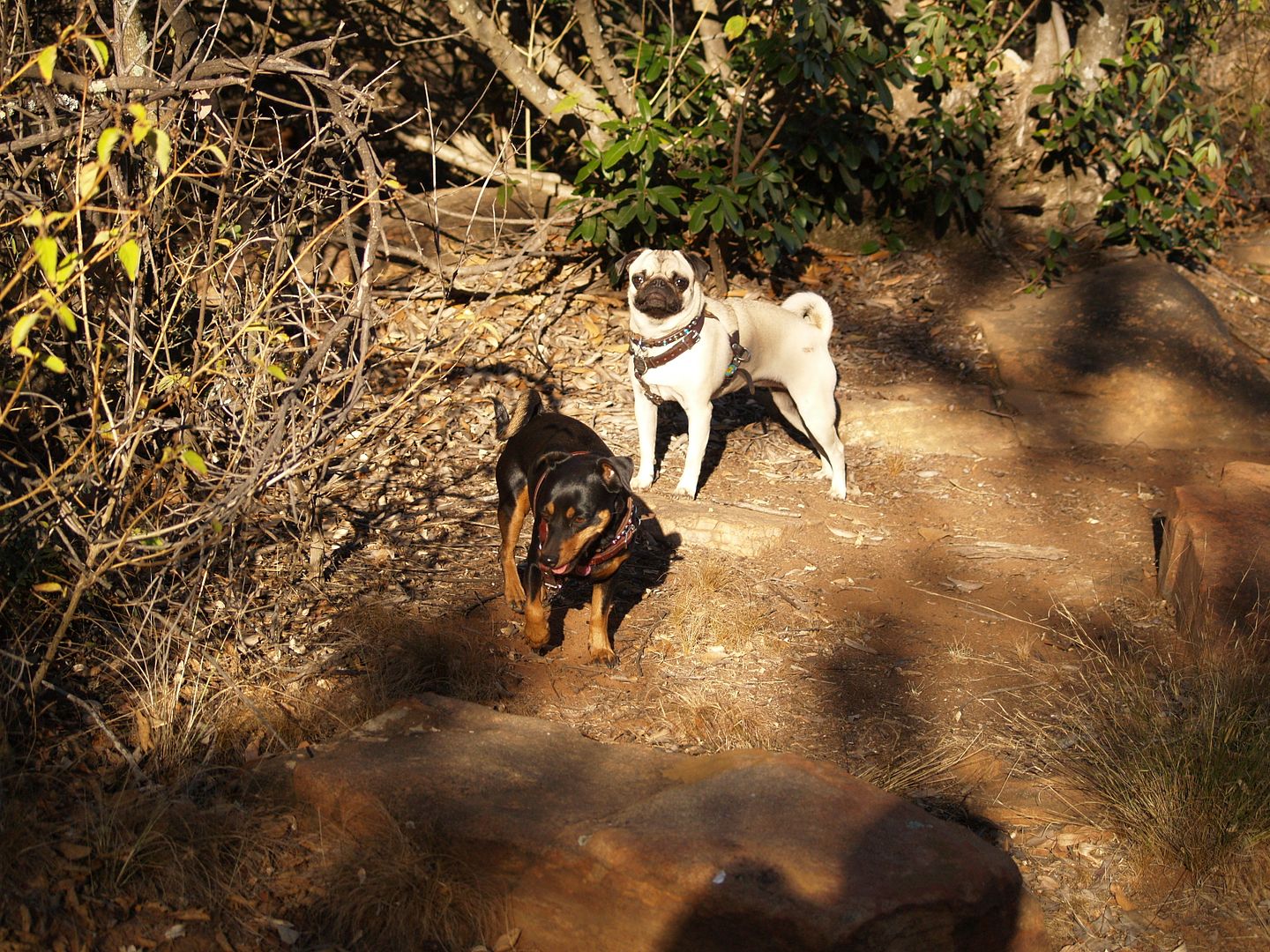
"The next challenge will be one of endurance. You will race to the rock stack, North of us, on the other side of the Magalliesberg. It is an hour away, more or less."
"Oh, that suits me just fine!" says the Dusky Lady. "I am fit, strong and in excellent condition, I can easily run all the way there."
"Yes, that's fine by me too. There is no way this little Lady will get there before me! But tell me, Fawn Maiden, how will we be judged?" asked the Gent.
"Do not worry, Loping Gent, I will be at the finish to check who gets there first." answered the Fawn Maiden.
The Dusky Lady asked if she knew a shortcut, that she could so confidently say she'll arrive first.
"Something like that" she said. "Now, there is yet another contest after this one, so we'd best get started."
Fawn Maiden had barely spoken those words when Dusky Lady and Loping Gent set off as fast as their legs could carry them.
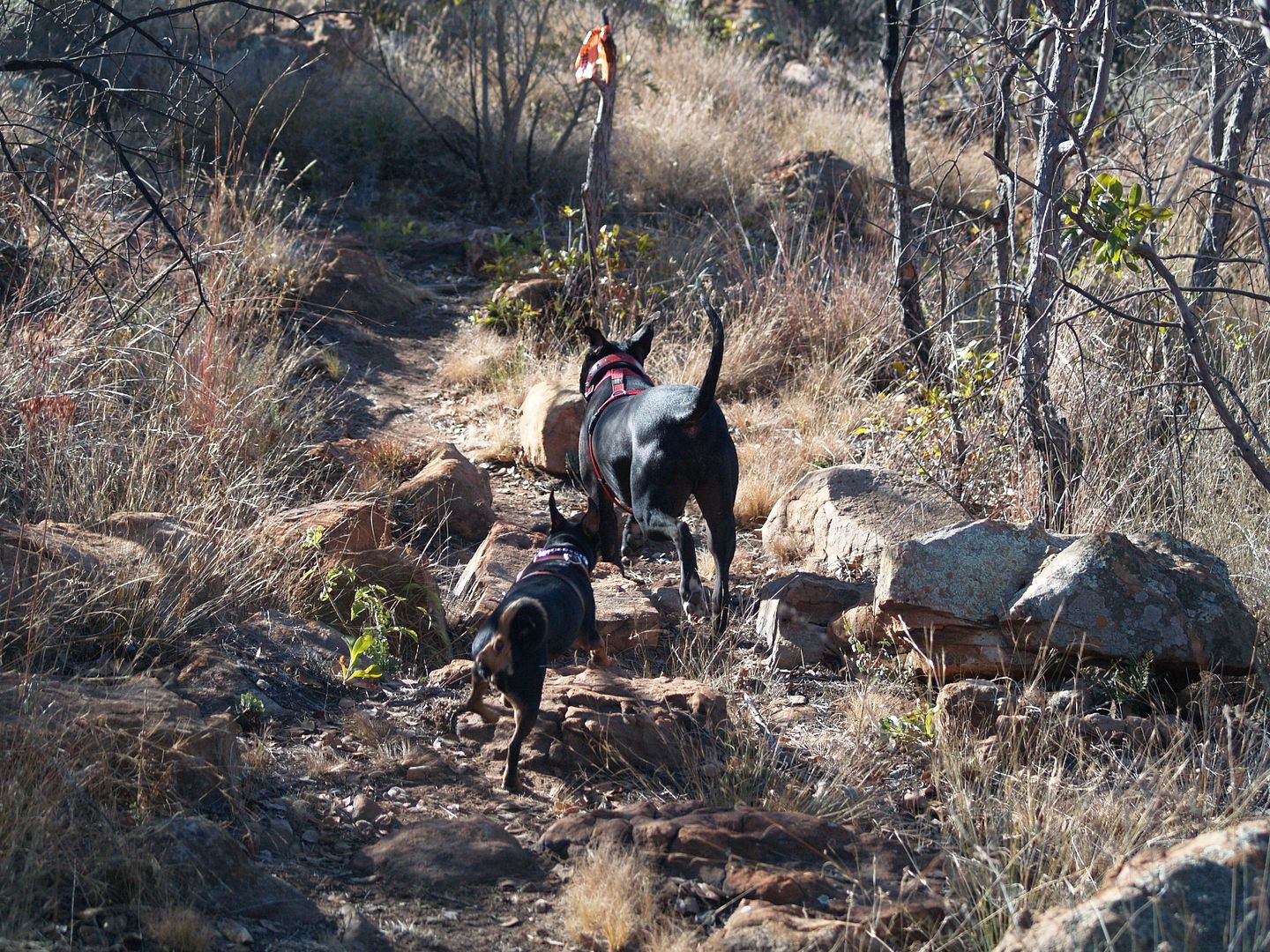
Winter is bone dry and the winter sun beats down on the veld without remorse. The direct route, with both the Dusky Lady and the Loping Gent had set off on would be dusty and hot, with no shade and no water. The Fawn Maiden knew this, so she planned her route to the rock stack to go along the river for most of the way. This would allow her to trot in the cool shade, and will let her drink as much water as she would like. She had no shortcut, in fact, her planned route was longer than the direct path. Knowing that the easy route is often faster than the direct route, she set of at a fast but comfortable trot to her destination.
Just about an hour later she saw the rock stack in front of her.
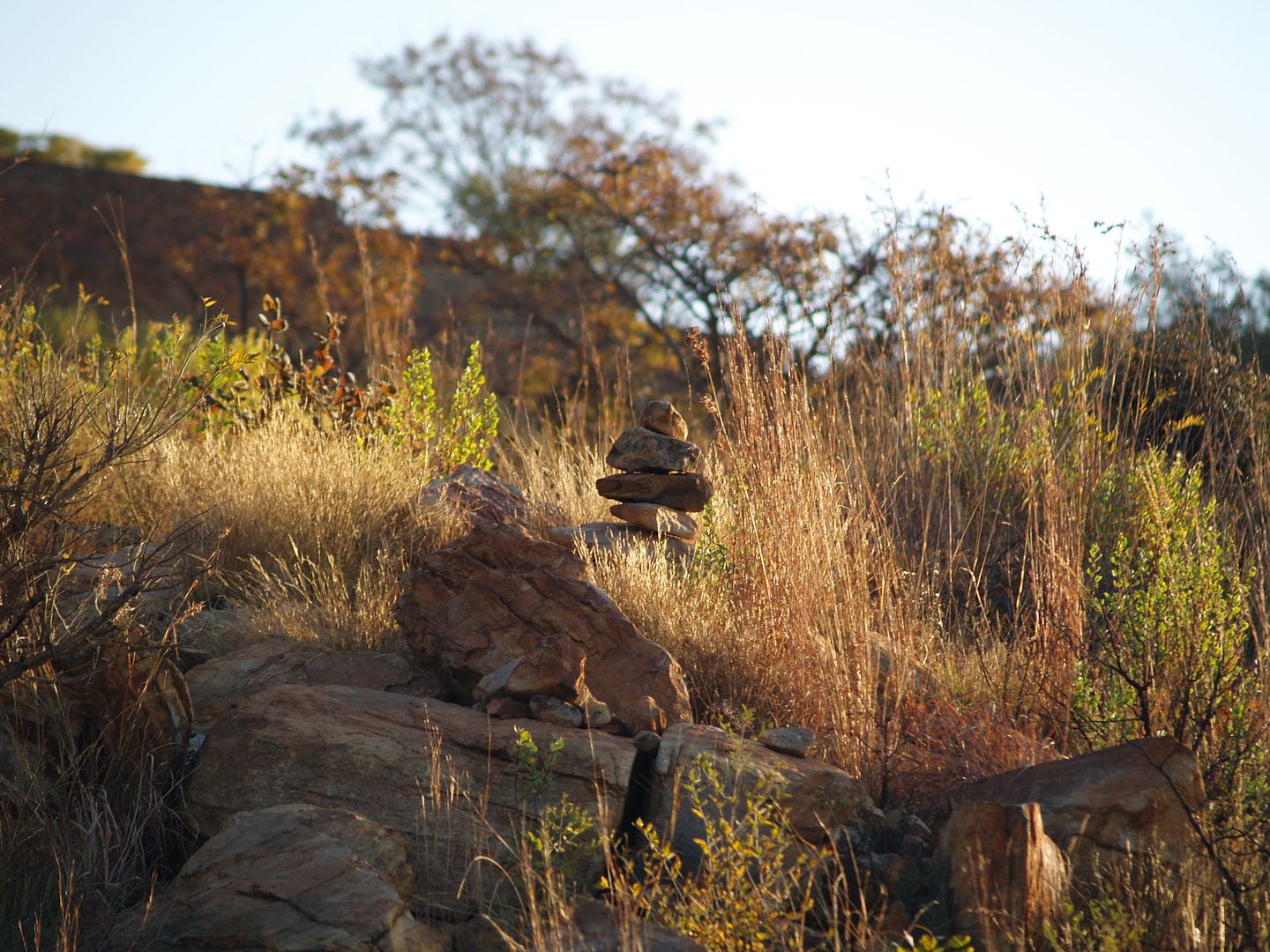
Neither of the other two had arrived yet, as she anticipated. So, she sat down and waited for them.
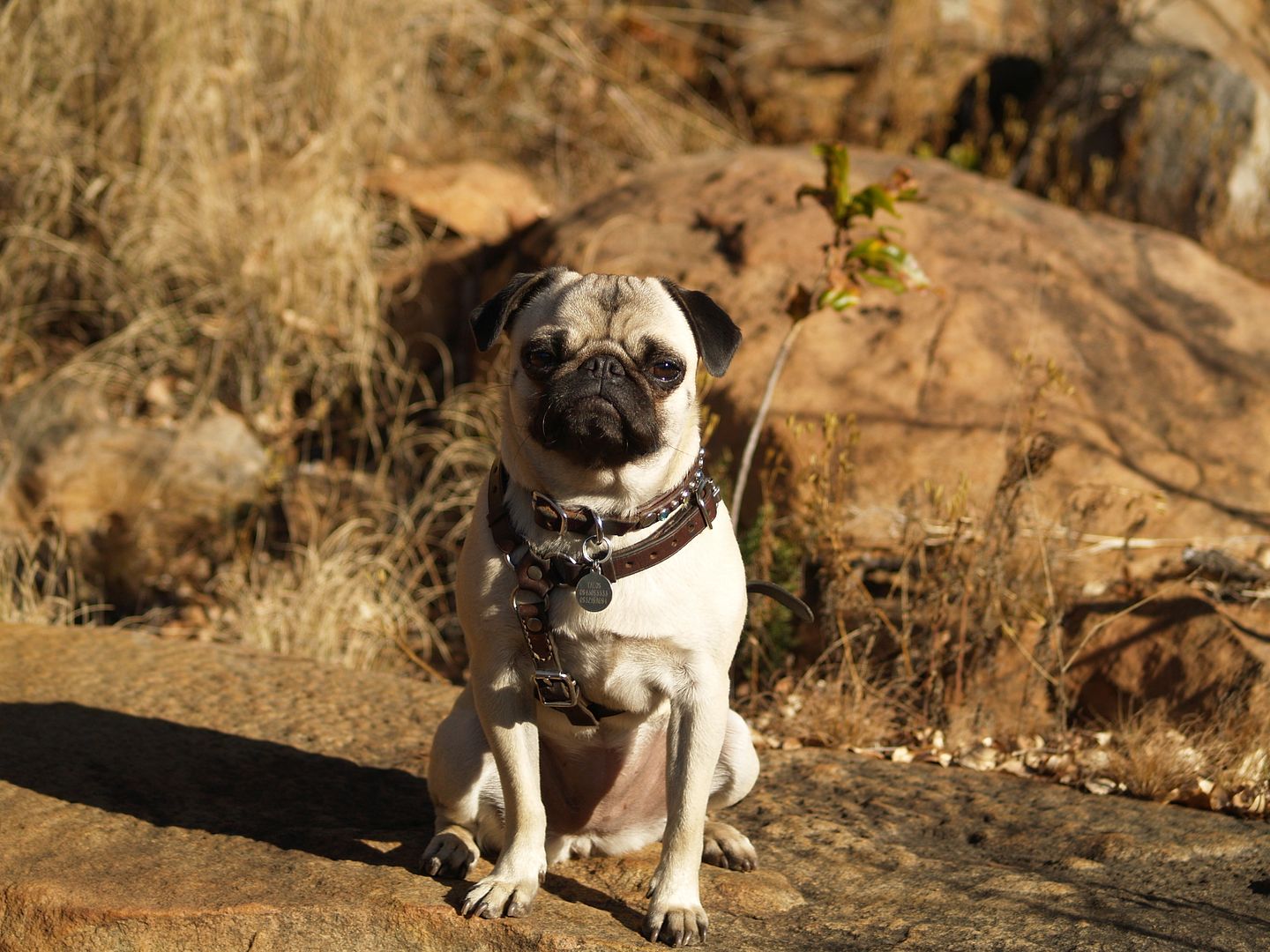
About half an hour later, two tired, dusty dogs came walking up to where she sat. The Loping Gent collapsed down, and the Dusky Lady put her head on his back for support.
"We made it!" he sighed.
"It was so very hot and dry" she added. "He outran me at first, but I passed him panting in the dust not too long after. Then I had to lie down too, which is where he found me. After that, we traveled together"
"I am glad you are safe, friends" said the Fawn Maiden. "It seems to me this is a tie."
"Agreed!" Said the other two in unison. They were simply too tired to argue.
After a rest, the Fawn Maiden asked if they were ready for the final test.
"We are, I believe" said the Loping Gent, his statement confirmed by a nod from the Dusky Lady.
"The final test is a hunt", said the Fawn Maiden. "Whoever catches a guinea fowl first will be the winner".
"I will overpower such a small bird! This is no problem at all." said the Loping Gent, and set off into the veld.
"Ah, what a fool!" the Dusky Maiden said. "You catch prey by agility, not by force!" She too set off to find her prey. Not too much time later, she was stalking up to where the fowls were hunting grubs among the bush willows. Her focus narrowed to a fine point, her whole body waiting for just the right moment to strike.
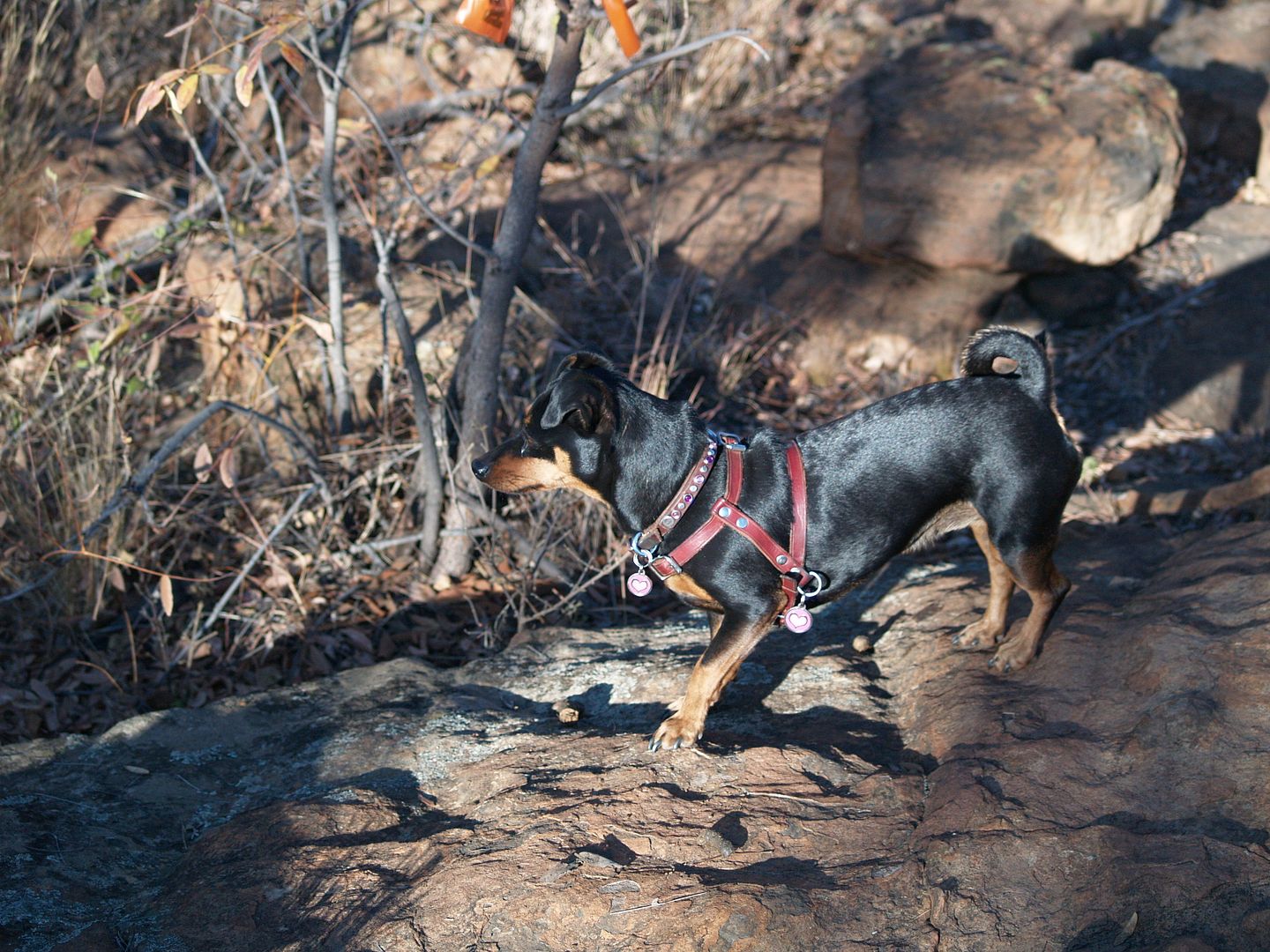
The time was right, the bird blinded by the slanting sunlight. She leapt, there could be only one conclusion... When suddenly the Loping Gent burst into the clearing, scattering the birds. Squawking they fled away from the two dogs, and in her great frustration the Dusky Lady turned her anger on the Gent. Laughing at her, he ran just quickly enough to keep out of reach of her white teeth.
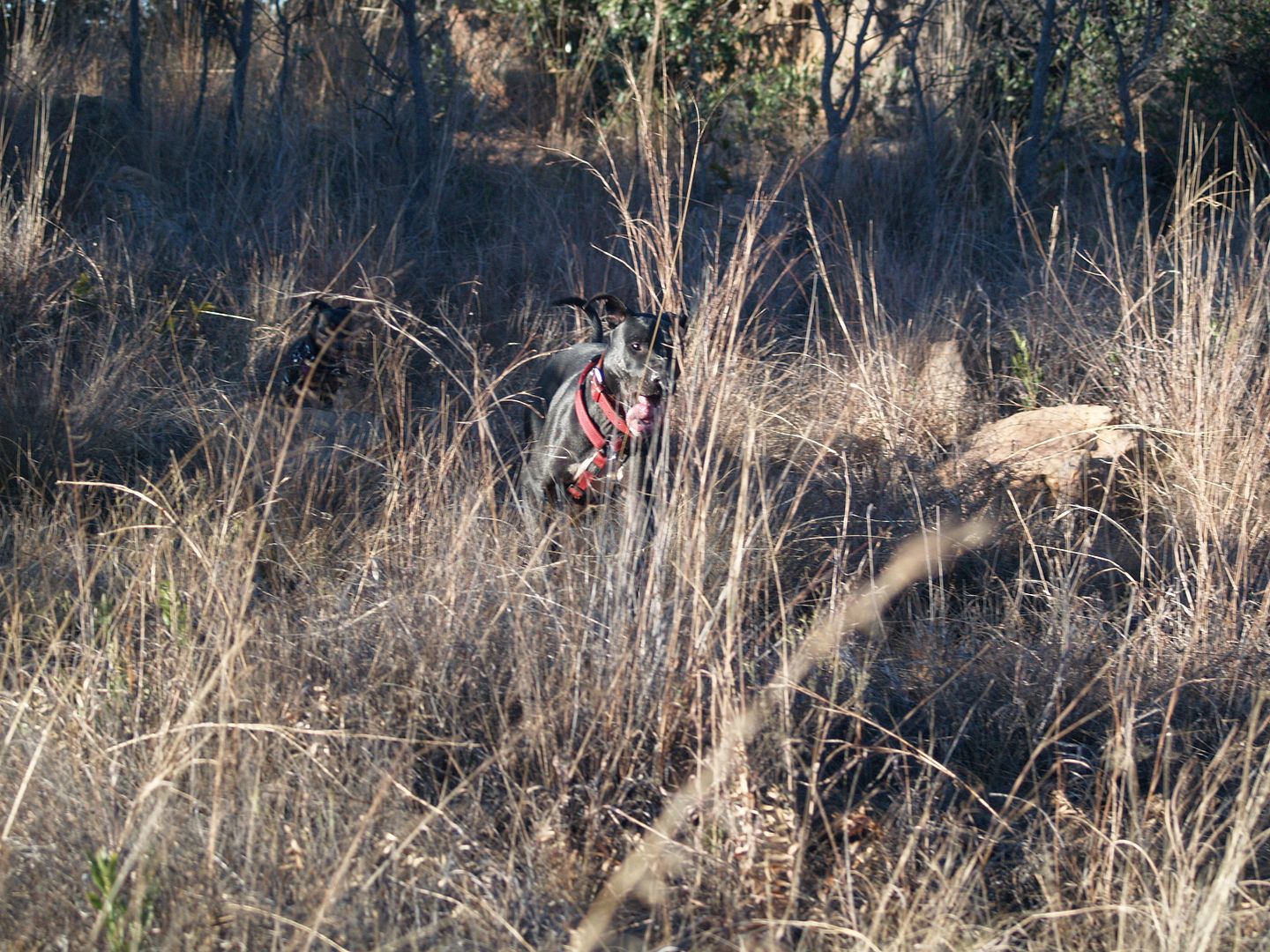
Soon enough, though, they forgot their quarrel, and resolved to go and hunt in separate areas. Not too much later, the Loping Gent brought a fowl to the Fawn Maiden, followed shortly by the Dusky Lady.
"Well done both of you!" she said. "But, seeing as Loping Gent was back first, he won this contest."
"That's right" he said, and puffed up his chest. "I won!"
"So what's the final result, Fawn Maiden? Who is the best dog?" The Dusky Lady asked.
"It's a tie" the Gent said. "You climbed the cliff faster than me, but I caught a bird before you. We shan't mention that horrible race."
Then, they noticed that the Fawn Maiden was surrounded by guinea fowl feathers.
"Did you catch one?" they asked.
The Fawn Maiden answered yes. "When you chased them up, Loping Gent, they were confused and scared, and not watching where they were landing. I simply had to position myself nearby and wait for it to land near me. I ate it while I was waiting for you two to come back. But yes, it is indeed a tie. You are both the best dogs.
Now, friends, shall we head home?"
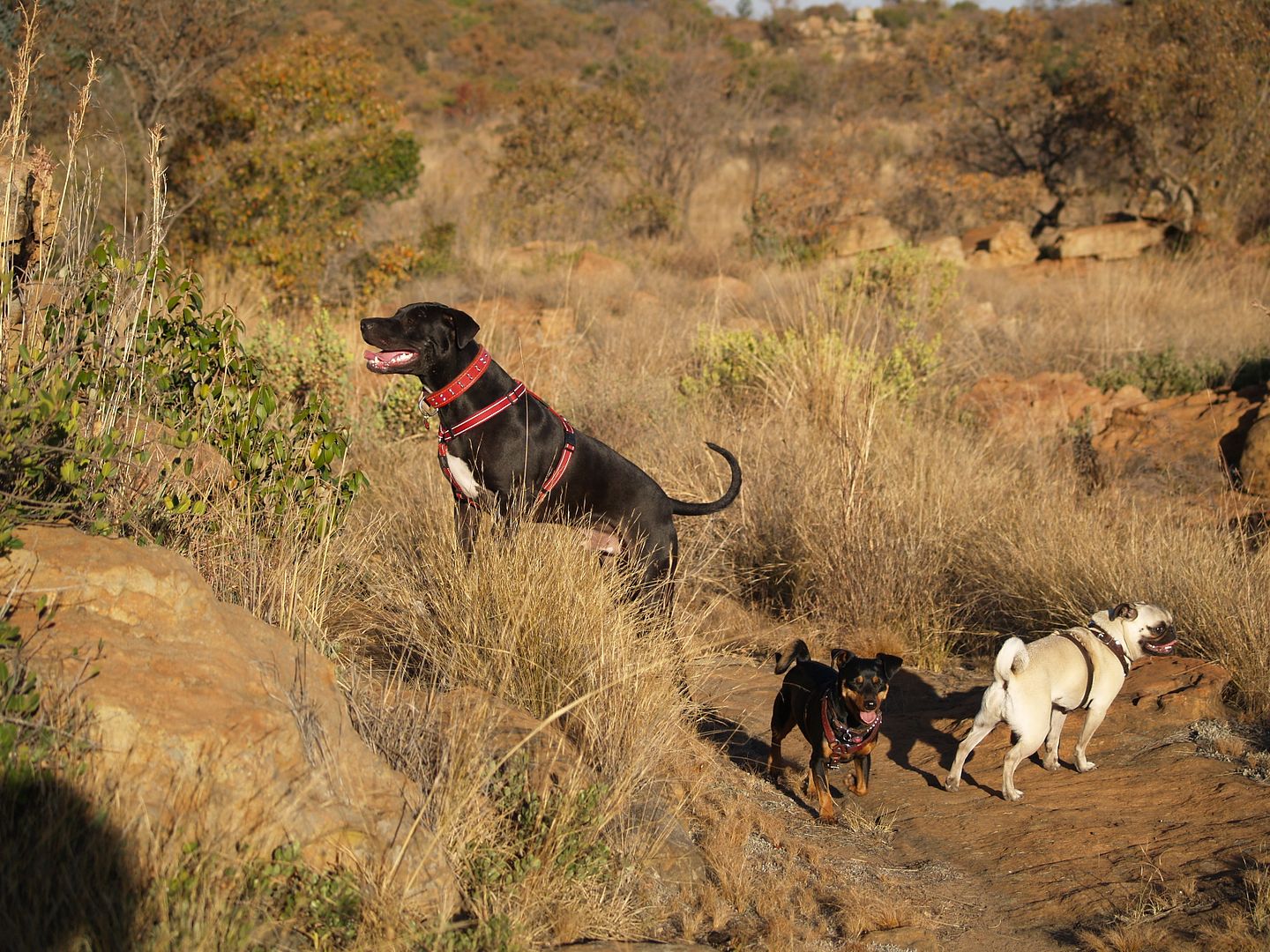
On the way home, the Dusky Lady and the Loping Gent looked at each other. Whispering, one asked the other if they also felt a bit like they'd been had. The other agreed. They confronted her. She had in fact done all of the challenges, and finished all of them the fastest!
Laughing, she said that you need not be strong or fast if you are clever!
Thursday, 5 March 2015
Wildflower
Old Cabbage Tree was watching the sun set over the hill one night, when he heard a deep sigh coming from underneath him. He spotted a small black dog, hiding between the rocks that anchor his roots. He would have ignored the creature, many mammals seek shelter for the night near him, but when another sigh escaped the Little Black Dog's mouth, he found himself too distracted to ignore her.


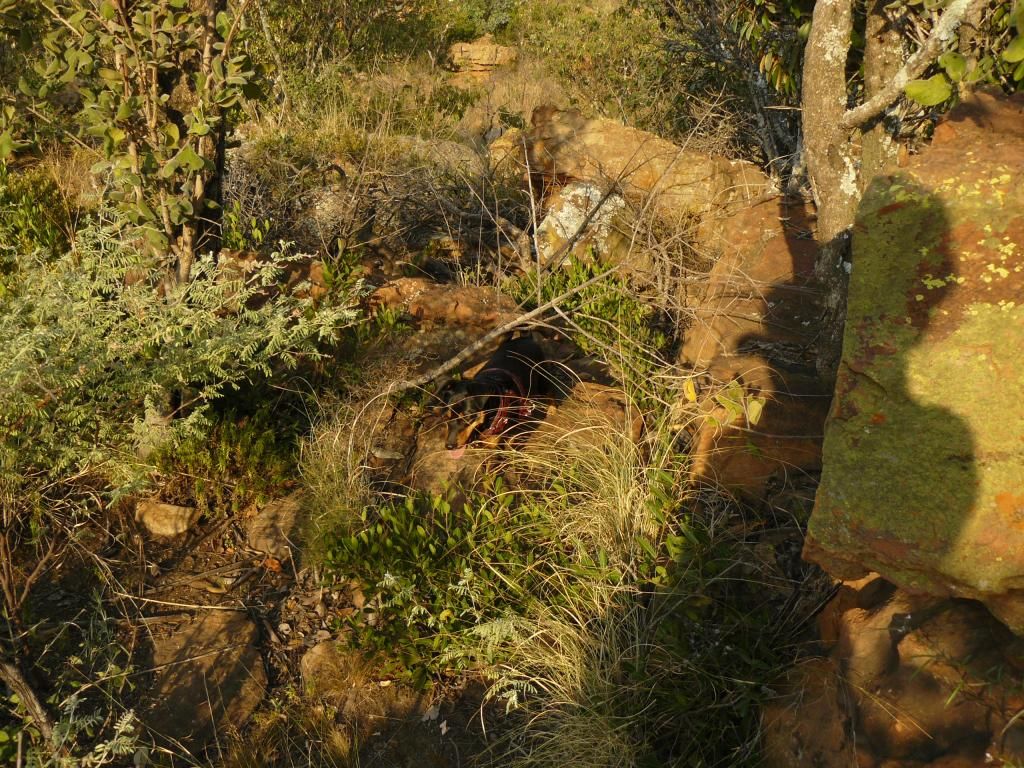
Rustling it's leaves, the Old Cabbage Tree asked Little Black Dog what had made her sigh so sadly, and why she is hiding here in stead of home with her family.
She explained that early that morning, she had come upon the most beautiful flower, glistening with dew. It stood tall and proud above the grasses, a soft yellow with a dark center.
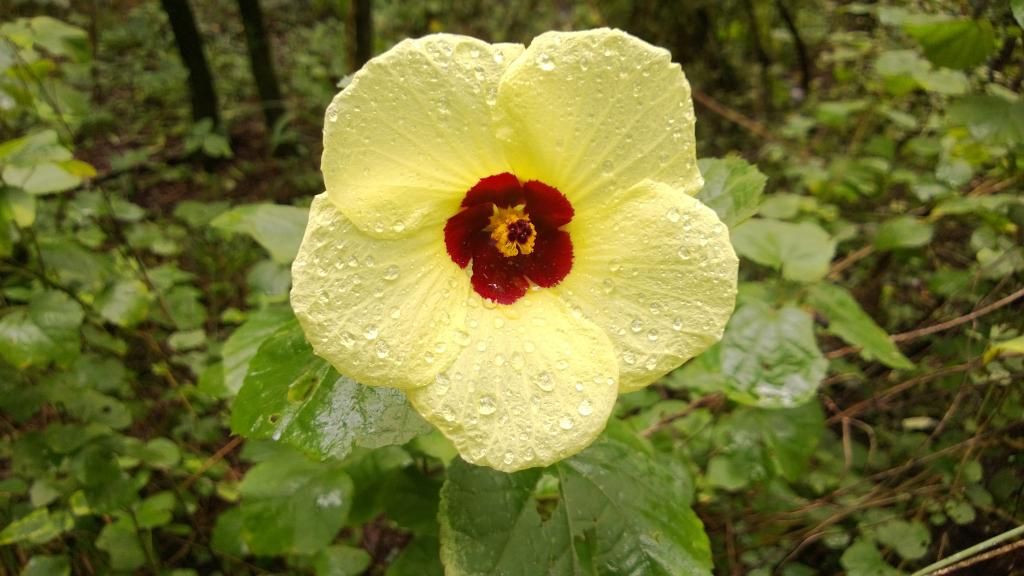
Now, quite confused, Old Cabbage Tree pointed out that seeing beautiful things are a reason to rejoice, not be sad. But the little black dog explained that she realised, as she looked at that flower, that she was the opposite of what she saw. She was neither light, nor delicate, nor tall. She does not stand proudly above the grasses, nor does the dew glisten in the morning sunlight on her fur.
"I am not beautiful, Old Cabbage Tree, and that makes me very sad."
Old Cabbage Tree took a moment to consider. He observed the little dog underneath him closely. Just as she was beginning to squirm under his scrutiny, he spoke up.
"It is true, Little Black Dog, that you are not like that flower."
His words made her shrink into herself.
"But, that does not mean you are not beautiful. Look here:"
He directed the wind around himself, gently parting a clump of grass. There, deep amongst the yellow shafts, was a small, bright red flower.
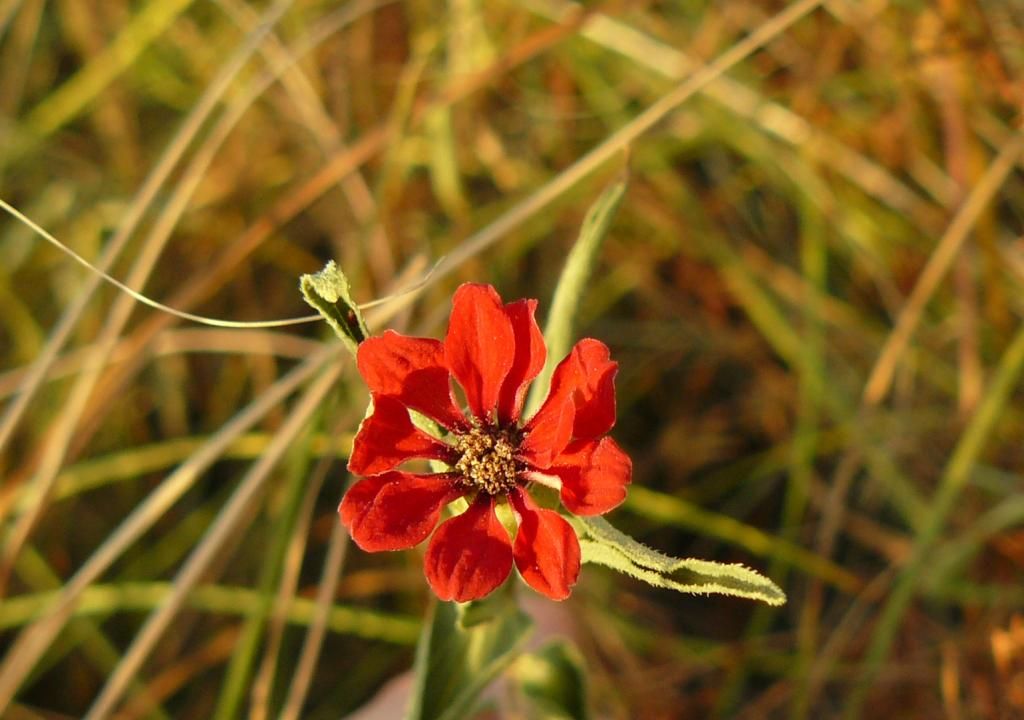
"Do you see that flower?" he asked her.
It was no bigger than her nostril, and she only noticed it when she had gotten up and inspected the parted clump closely.
"Is it not lovely?" he asked her.
She nodded, it was a beautiful little flower indeed.
Old Cabbage Tree explained. Some things are like the morning flower, tall and proud and easy to notice. Most everyone can tell that they are beautiful.
"That is fine and good, and I am glad to have such beauty in the world", he said, "but some things are not like that. Some things carry their beauty close to their heart, like a secret. It is not a fault of theirs that they are like this - they are still very beautiful, like that red flower there.
In stead of being cultivated beauties, like your dew-flower this morning, they are wildflowers. Because their beauty is harder to see, some overlook it. Sometimes, they even overlook it themselves."
He dropped a piece of bark pointedly near her.
"Remember, Little Black Dog, it's not their fault if others fail to see their beauty. That does not mean that it is not there, and that it is not truly wonderful".
Little Black Dog looked up at his leaves, watching the late sunlight filter through them.
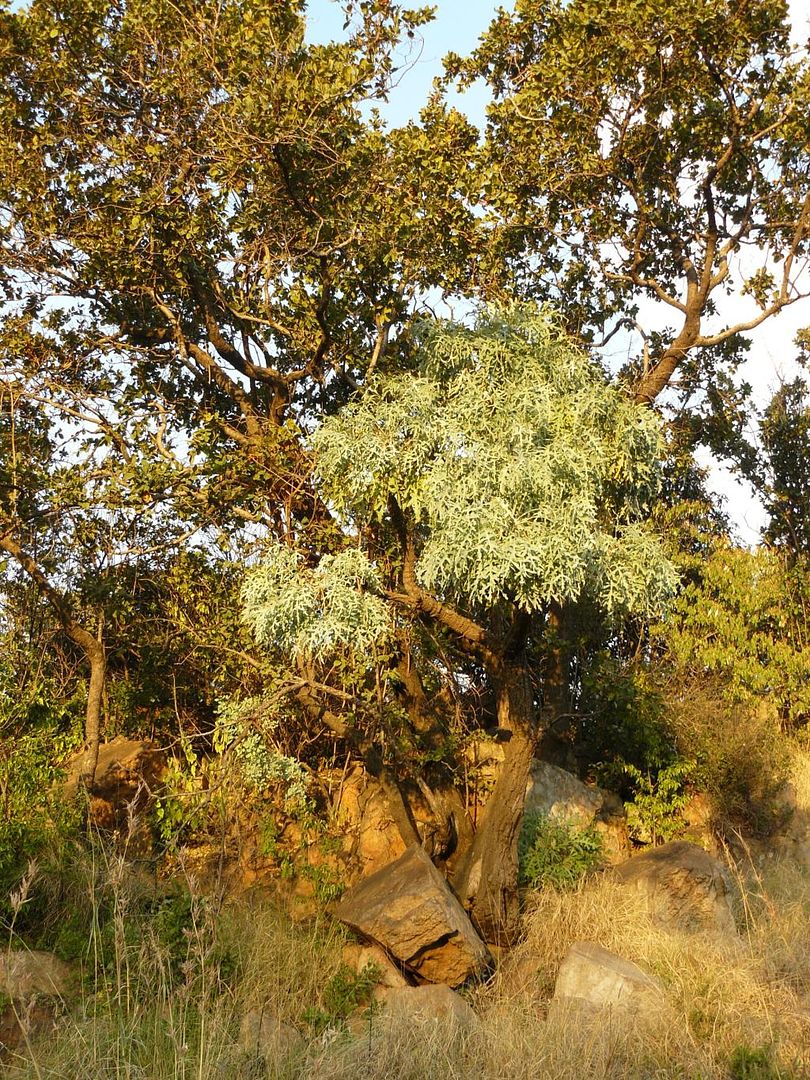
"Thank you, Old Cabbage Tree." she said, and turned to depart, feeling much happier.
"A last secret, before you go, Little Dog."
She pricked an ear his way, listening intently.
"Some even prefer the hidden beauty of a wildflower. Like me"
She could not help but smile as she headed to her home.
Thursday, 19 February 2015
Dogs and happiness
I'm not here to talk about soul-fulfilling, enduring, long term happiness. That needs a lot more than a dog (or maybe, a lot less than a dog, given that it probably comes from inside of you and is at least partly a decision). I'm here to talk about that wonderful pick-me-up that you can get from spending time interacting with a dog.
No nonsense here, this is a scientifically studied phenomenon. Those same feelings you got when you are newly in love? A dog is a perpetual source of those. Simply sitting with your dog and gazing into their eyes has your body making lovely bunches of the stuff, but even better than that, your dog typically likes to move and be active, so if you have a dog, you are much more likely to move and be active ... and it's no secret that regular exercise is pretty essential to keeping a positive outlook on life. Elle from legally blonde had it right:
" Exercise gives you endorphins. Endorphins make you happy. Happy people just don't shoot their husbands, they just don't."So, having a dog makes you happy. This is starting to sound like a "get a puppy" commercial (or an adopt a dog pamphlet, which might be even better if your main aim is a happiness provider). Might I mention that dogs reduce the risk of heart disease massively too?
Heh. Not really what I want to write about. Nor is an 'adopt a dog' message what I want to get at (dog ownership is a lot of work too, so never just impulsively get one). What I actually want to write about is the specific things that my dogs and I get up to that makes me happy. There are three of them, physical touch, activities, and play.
1. Physical touch
My little pug, Talos, is a great source of physical touch and comfort to me. She's not a touchy-feely dog by any measure, she rarely stands still for petting and even more rarely enjoys it (a quick wrinkle rub is enjoyable, but that's about it). What she does do, though, is put herself on my lap and just stays there, napping, watching TV, or my computer screen, or just the world going by. She's done this since she was absolutely tiny. |
| Dis is my lap. Yoo mus go find other one. |

2. Activities
Let's go do stuff! Both my dogs like getting out there and doing stuff. Be it tracking, or just a walk around the neighbourhood, they're almost always ready to go. If I'm feeling particularly low, taking them to a park with other humans and other dogs almost guarantees positive, pleasant human and canine interaction. I simply cannot feel sad while amusing children with your pets' antics (one having her belly rubbed, the other coaxing them into a game of chase or doing tricks for them). Getting your pooch and going to a class has much the same effect for me. We go, we work towards a goal with other people, and like magic your internal happiness tank is a little fuller.Some days when I just don't want to see other people, getting out into nature makes a big difference too. If your dogs are reasonably healthy and willing to come back when you call, try a short nature hike (if their recall is less great, do the same but with a long line...). It is both really nice to just get out, and to watch your dogs just being dogs without the pressure to behave that is sometimes present around a house or in daily life. Plus, it's pretty!
 |
| So very, very pretty! |
3. Play
This is the big one. Here's a challenge for you. Be sad. Very, very sad. Then look at these: |
| Is dere something in mah jowl? |
 |
| Er mer ribbon! |
 |
| No one can resist my play! |
  |
| CRRRAZY EYES! |
  |
Now? Excellent. Go play with your dog :)
Basically, one of the key parts of my happiness is my dogs. I'd bet they do the same for you, if you'd let them.
On friendship and love (and Valentine's day)

Tell me now,
happy Valentines
why all your florid praise
and erudite verses
somehow fail to wow?
Could it be that love
or friendship
is not a summer's day
or a red, red rose
or the cooing of a dove?
No, to me it would seem
love is nothing less
or more
than two curls mirrored
in black and cream
Sunday, 18 January 2015
Things you may not have tried - Tracking
On Saturday mornings, at 5:30, three normally markedly more nocturnal creatures rise from their slumber, and head for a congregation of like minded people in one field or another.
Mornings are simply the most beautiful part of a day. The world is fresh and new, seemingly sparkling with delight in the soft sunshine.

But we are not out here to admire the beautiful morning, no. Well, not entirely. We are here to plant a pole in the ground, and armed with a chunk of raw animal, walk away from that pole in strange patterns, carefully counting out steps as we go.
 |
| Look carefully, and you can spot the human walking in a straight line away from the pole, laying a track. Tip: She's in front of the mine dump. |
At the end of your particular pattern, which, for those just starting out is a straight line, but for those quite advanced can be an 'R' shape, an 'h' shape, or even the infamous 'B', you commit your chunk of animal to the care of the grassy field, step over it, and carefully walk back to where the cars are parked and the dogs are waiting eagerly. Beginner dogs will set out nearly straight away, but more experienced dogs can wait for a long time, sometimes several hours, or even a day, before they are asked to follow their track.
Kira is not one for overt shows of excitement. Sure, she likes treats, and she loves belly rubs, but aside from the most wonderful dance for her daily walk and the occasional bone, she maintains an air of stoic dignity. Not so at the tracking fields. Impatiently she barks at you from her crate as soon as she becomes aware of your approach. She can barely stand still for her harness to come on, can barely contain herself as you clip the ten meter long line to it.
 |
| C'mon Nina! |
Impatiently she jumps up at me, prompting me to get to the starting pole faster, faster.
When we reach the pole, magic happens. You approach the pole you planted and touched, and Kira changes. Her whole self awareness shrinks down to her nose, and after what seems like the briefest of sniffs at the base of the pole, we're off. I let the line play out until she's about seven meters away from me, enough distance to let her work on her own, but close enough that I am there, performing my duty of marking the last known point where she was correctly on the track. Mine are small dogs, Kira nearly disappears into the summer grass.
 |
| #smalldogproblems |
Following an invisible path through a field, one consisting of your scent only, that your human eyes cannot see, that you have only the barest of remembrance of exactly where you stepped, is a humbling experience. Kira tracks well over 300 meters, and while I definitely have the general gist of where I went, she can tell me where I stepped and how long I lingered there. Halfway along, her track veers sharply to the right - we are teaching her to do corners, is the official reason. This seems absurd, though, when Kira takes the corner without stopping, without hesitation. She just smoothly turns right and continues. Teach her this, this skill that is as basic to her as breathing? We are fooling ourselves.
 |
| Om nom nom! |
Of course, this whole adventure is hardly humbling for Kira, who delights in forging ahead at great speed, occasionally looking back with a grin as if to laugh at me and my inadequate senses.
Sooner than you think, Kira is upon her prize, and while I sing her praises she eats it.
Where Kira is just amazing at tracking, unstoppable, unflappable, and with a confidence and accuracy that belies her short career, Talos is not. Compared to Kira, to me, Talos seems downright slow, but in all fairness, she is about average at this tracking game. Slow, methodical, and insisting upon dead silence while she works, where Kira could not care less if you were to pull out a marching band and dance a can-can, as long as you walk faster, already.
Talos also nearly disappears into the lushness of summer.

Talos tracks a hundred meters, despite having been at this for much longer. But I am proud of every step, because malicious rumour has it that pugs cannot do this. I can truthfully say rumour is false, that while Talos is average, she is as good as any other average dog. I am quite sure there are pugs that are better at this, with more focus for this kind of task, as I am quite sure that there are fairy-headed basset hounds that will be quite inept, though I suspect both cases are about equally rare. Either way, learning independent working, and learning to both use, and trust their nose, is a great skill we must encourage in our dogs - most especially those who tend to ignore it!
 |
| Good pug. That will most definitely do. |
This does not take away from the fact that my little pug sniffs her starter pole, and sets out on her invisible path into the field, leading me to the prize. We are developing her confidence, as you can see, we crossed a footpath this morning - difficult for many dogs, they tend to follow along the path in stead of sniffing out the fainter scent of their own human leading back into the brush. But no problems here, slowly, carefully my puggy lady sniffed my trail, and slowly, carefully she sniffed the path, before moving right over it and back into the tall grass.
Hers was a very well earned reward at the end, today.
 |
| Talos is never one to let an opportunity to have fun pass her by. |
Afterwards, what would a good morning be without some frolicking in the grass?
 |
| At tracking, the silly side of Kira comes out, and she happily bounds through the tall grass, chasing fairies that only she can see. Undoubtedly the star of the morning, her normally reserved self just can't help it. Whee! |
With this in mind, do consider giving tracking a go. Unlike many dog sports, you need next to no equipment, and while handling a long line and learning to read your dog's body language take a bit of finesse, both are easily learnt with a bit of practice.
You will need a long line, which is quickly made out of some rope and a clip, a harness, which you likely have already, and a chunk of meat from the butchery. These are easy and useful things to have anyway, and while you can often borrow one, the pole is little more than a broomstick with a spike on one end. In our experience, the trainers gently, slowly, encouragingly coax your dog over time - you cannot force a dog to track.
The activity is suitable even for physically less strong dogs, like Talos, they merely need to be able to move forwards (though, if like my two, you will track through tall grass, some fitness may be required for them to keep bunny hopping for 300 meters, like Kira tries to do).
It's really hard work for the dogs, despite the relatively physically undemanding nature. Both of them sag down into their crates when we head home afterwards and are completely out for the whole drive and for most of the rest of the day. Well earned sleep, I say!
To recap, the good and bad of tracking:
Good:
The sheer magic of 'seeing' through a dog's nose
Really easy to get started
Little to no equipment needed
Physically relatively undemanding for both dog and human - both must be able to walk for moderate distances
Encourages independent thought and confidence in a dog
Safe even for dog/human reactive dogs - dogs are on lead, and widely spaced in a large area
Bad:
Early mornings
Involves some travel to get to large open spaces
Can be very slow paced
Lots of exposure to ticks
Monday, 5 January 2015
Dating site profile: Bane (or, am I your dog?)
Introducing Bane, a sleek, glossy black boy with so much love to give.
Bane is two years old, male, neutered and has gorgeous brown eyes with short, black fur with a white patch on his chin, chest and tiny bit of white on his toes. He weighs about 40 kilograms.
Bane is everything you could want in a big, bouncy dog. He loves to swim and he loves to play games. He would love long walks and play sessions in the park, but sadly, right now, he can't get those. Bane and his house mate, a female dog, do not get on very well, and with only one human between them there simply is not enough time or energy to give both dogs what they need.
Bane is very, very excited about new doggy friends, so much so that his enthusiasm can be a bit scary to other dogs, landing him in trouble. Taking a bit of time to slowly introduce him to many friends should help with this, though - he's not a bad boy, just a bouncy boy!
Bounce is not all this hunky hound has to offer. He is a champion cuddler, and would like nothing more than to curl up with you and watch a movie or a game. Even better if you would share your popcorn - that's right, this boy loves treats!
Bane has been very well cared for, he has all of his vaccines and has been regularly seen by a good vet. He has eaten only good quality dog food. He lives in Johannesburg, but he can easily get to anywhere within an hour or two's drive.
Could this be just the dog you were looking for? Comment below, drop me an email, send a smoke signal... This boy needs a home!
 |
| Am I your dog? |
Bane is everything you could want in a big, bouncy dog. He loves to swim and he loves to play games. He would love long walks and play sessions in the park, but sadly, right now, he can't get those. Bane and his house mate, a female dog, do not get on very well, and with only one human between them there simply is not enough time or energy to give both dogs what they need.
Bane is very, very excited about new doggy friends, so much so that his enthusiasm can be a bit scary to other dogs, landing him in trouble. Taking a bit of time to slowly introduce him to many friends should help with this, though - he's not a bad boy, just a bouncy boy!
Bounce is not all this hunky hound has to offer. He is a champion cuddler, and would like nothing more than to curl up with you and watch a movie or a game. Even better if you would share your popcorn - that's right, this boy loves treats!
Bane has been very well cared for, he has all of his vaccines and has been regularly seen by a good vet. He has eaten only good quality dog food. He lives in Johannesburg, but he can easily get to anywhere within an hour or two's drive.
Could this be just the dog you were looking for? Comment below, drop me an email, send a smoke signal... This boy needs a home!
Thursday, 27 November 2014
Hiking with dogs - some important stuff to think about
I love taking my dogs and going for a hike. It's unlike a walk in two ways, it usually allows me to let them run off lead, and it is often 'out in nature' as much as I can get in a big city. I imagine that many people would enjoy this, and I always encourage people to get out there and walk more often, especially with dogs in tow. They need more exercise than we think, and more mental stimulation too, and a good hike meets both of those demands.
Plus, you get to take wonderful pictures.

Isn't she just beautiful? It was a cloudy day, that one, which makes for the most marvelous soft light.
I digress.
Picking up a lead and a collar, some poopie bags, and heading off on a neigbourhood walk is easy. There's very little preparation to be done. A hike, however, needs a little more thought. Let's look at some of those things:
1. Good dog kit.
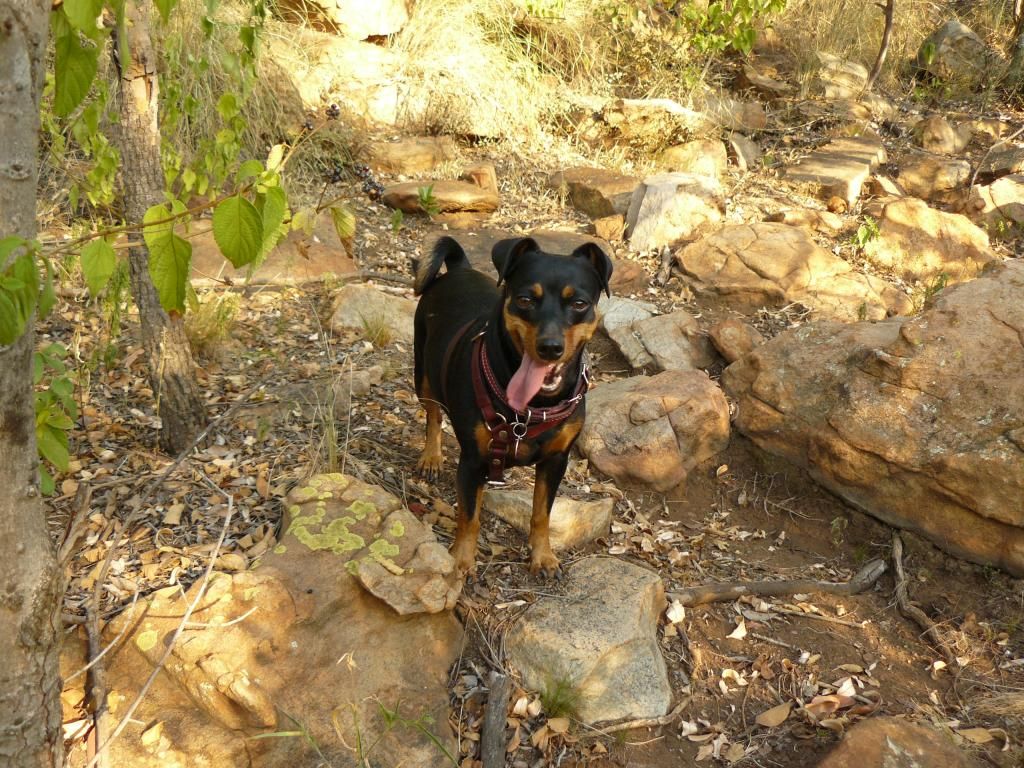
A collar is mostly ok for neighbourhood walks, given that your dog is not much of a puller or not a type of dog susceptible to tracheal collapse. For a hike, though, you may need to hoist your dog bodily up a cliff, rapidly pick them up out of harm's way, or rescue them from a river. A good harness, one that is study, lightweight and neither chafes nor interferes with your dog's natural movement is the way to go. The Julius K9 harnesses are really neat (Talos is wearing one in the picture above), having a handle and space for some doggie back packs, but any sturdy H-harness works well too, though they do tend to wear away some hair at the very base of their rib cage. I've found, for the terrain we tend to hike through, that fabric harnesses pick up too many burrs and seeds and get scratchy very quickly (poor dogs!). This may well differ in your area. I don't much like step-in harnesses, they tend to catch my dog in the armpit which affects their gait.
 In the picture above, you can see my preferred hiking kit - collar and leather h-harness. Having clearly marked and readable tags on your dog is a very, very good idea, and forms part of what I would consider good dog kit.
In colder climates, good dog kit may extend to include a coat or booties. Even mid winter it's never cold enough to warrant clothing on a dog while active, so I know pretty much nothing about what makes good active cold weather gear.
2. Good human kit.
Don't underestimate the value of a good, comfortable backpack that has enough space for all your things (in my case, this would include my camera) and a little spare, in case you need to pop a dog in there. Well, if you have bigger dogs, maybe not that last one. Additionally, take some time to think about your leads. You will want something that does not cause rope burn if you end up walking with dogs on lead for hours (you just might). Leather or soft rope leads are best, in my experience. A good hat, and some good, comfortable hiking boots with proper ankle support are good ideas too!

3. A good emergency plan.
If something happens in the suburbs or on a city block, you have many people around you that could help, and often, veterinary care nearby too. If something happens on a hill somewhere, though, it's not so easy. This teeny tiny emergency kit is a super idea:
Be Prepared: A Tiny First Aid Kit for Hiking With Dogs
Another thing to think about is what you'll do if your dog is so badly injured it needs carrying. Mostly this won't be an issue, unless you have a 50 kilogram plus big dog, or are physically unable to carry a pet. Having a working phone and someone to call for help is a very good idea, as is knowing where you are (or, more relevant, how others can get to your location).
4. Enough water.
This is perhaps less of an issue if you hike in an area with abundant clean water sources to drink from. In SA, though, it's hot and it's dry, and what water is available is usually not drinkable. Pack enough water for you and your dogs. In my case, an hour's walk in hot weather on a dry, dusty hillside sees me carrying about three liters of water. Half of that will go to me, and half to the dogs, more or less. I have a light plastic bowl for them to drink out of - collapsible silicone bowls are awesome for drinking water.
As an aside, knowing the signs of impending heatstroke is a good idea too.

This here pug is too hot, and needs to cool down. Shade, and water both to drink and to wet her with is called for. Look at that tongue - the bright pink, cup-shaped tongue is the key.
5. Pest control.
Where we walk, we encounter lots of ticks. Where you walk, it might be mosquitoes bearing heartworm, or snails bearing bilharzia, or leeches. Either way, you need to be ready. I apply some bug repellant to my legs, and both my dogs are treated with a topical spot-on treatment every four weeks.
6. A good recall.
Perhaps that's phrasing it a bit lightly. A really, really solid recall that will not let you down when your dog sees a zebra or a fieldmouse over there and wants to go eat it, but is likely to get killed if they try. This is the dealbreaker of off-lead hiking, if your dog does not come back, you will be without your dog very quickly, and very few dogs could survive on their own in the wilderness.
So practice, practice, practice. :)
Now go! Explore the wild places with your pooches!
Plus, you get to take wonderful pictures.
Isn't she just beautiful? It was a cloudy day, that one, which makes for the most marvelous soft light.
I digress.
Picking up a lead and a collar, some poopie bags, and heading off on a neigbourhood walk is easy. There's very little preparation to be done. A hike, however, needs a little more thought. Let's look at some of those things:
1. Good dog kit.
A collar is mostly ok for neighbourhood walks, given that your dog is not much of a puller or not a type of dog susceptible to tracheal collapse. For a hike, though, you may need to hoist your dog bodily up a cliff, rapidly pick them up out of harm's way, or rescue them from a river. A good harness, one that is study, lightweight and neither chafes nor interferes with your dog's natural movement is the way to go. The Julius K9 harnesses are really neat (Talos is wearing one in the picture above), having a handle and space for some doggie back packs, but any sturdy H-harness works well too, though they do tend to wear away some hair at the very base of their rib cage. I've found, for the terrain we tend to hike through, that fabric harnesses pick up too many burrs and seeds and get scratchy very quickly (poor dogs!). This may well differ in your area. I don't much like step-in harnesses, they tend to catch my dog in the armpit which affects their gait.
In colder climates, good dog kit may extend to include a coat or booties. Even mid winter it's never cold enough to warrant clothing on a dog while active, so I know pretty much nothing about what makes good active cold weather gear.
2. Good human kit.
Don't underestimate the value of a good, comfortable backpack that has enough space for all your things (in my case, this would include my camera) and a little spare, in case you need to pop a dog in there. Well, if you have bigger dogs, maybe not that last one. Additionally, take some time to think about your leads. You will want something that does not cause rope burn if you end up walking with dogs on lead for hours (you just might). Leather or soft rope leads are best, in my experience. A good hat, and some good, comfortable hiking boots with proper ankle support are good ideas too!
3. A good emergency plan.
If something happens in the suburbs or on a city block, you have many people around you that could help, and often, veterinary care nearby too. If something happens on a hill somewhere, though, it's not so easy. This teeny tiny emergency kit is a super idea:
Be Prepared: A Tiny First Aid Kit for Hiking With Dogs
Another thing to think about is what you'll do if your dog is so badly injured it needs carrying. Mostly this won't be an issue, unless you have a 50 kilogram plus big dog, or are physically unable to carry a pet. Having a working phone and someone to call for help is a very good idea, as is knowing where you are (or, more relevant, how others can get to your location).
4. Enough water.
This is perhaps less of an issue if you hike in an area with abundant clean water sources to drink from. In SA, though, it's hot and it's dry, and what water is available is usually not drinkable. Pack enough water for you and your dogs. In my case, an hour's walk in hot weather on a dry, dusty hillside sees me carrying about three liters of water. Half of that will go to me, and half to the dogs, more or less. I have a light plastic bowl for them to drink out of - collapsible silicone bowls are awesome for drinking water.
As an aside, knowing the signs of impending heatstroke is a good idea too.
This here pug is too hot, and needs to cool down. Shade, and water both to drink and to wet her with is called for. Look at that tongue - the bright pink, cup-shaped tongue is the key.
5. Pest control.
Where we walk, we encounter lots of ticks. Where you walk, it might be mosquitoes bearing heartworm, or snails bearing bilharzia, or leeches. Either way, you need to be ready. I apply some bug repellant to my legs, and both my dogs are treated with a topical spot-on treatment every four weeks.
6. A good recall.
Perhaps that's phrasing it a bit lightly. A really, really solid recall that will not let you down when your dog sees a zebra or a fieldmouse over there and wants to go eat it, but is likely to get killed if they try. This is the dealbreaker of off-lead hiking, if your dog does not come back, you will be without your dog very quickly, and very few dogs could survive on their own in the wilderness.
So practice, practice, practice. :)
Now go! Explore the wild places with your pooches!
Monday, 24 November 2014
Treats: Bacon, liver and cheese, oh my!
 |
| I, Talos, do not aprove of this message. I am not getting too many treats! Outrageous! |
I also have teeny, tiny little dogs. Itty bitty pooches that both of them, really, really love food.
Here we have the crux of the matter. Treats are easy. Anything your dog likes is a good treat. My list is long and varied, for the one it's mostly meat, for the other, fruits, some veggies and cheese is definitely also there.
Also easy is making your treats tiny. It's necessary to have them teeny tiny, because it's so easy to feed a small dog into rotundness.
But even so, I've noticed a distinct softness about the waistline of my pug. She's up 500 grams from where she was.
We have been training a lot, mind you. But I need to be careful! 500 grams on her is a 10 % weight gain.
So, some ideas for ways to stretch your daily treat allowance:
1. Use their food for treats.
Easier said than done, sometimes, but this is the best way to get more training bang for less calories. You can absolutely cut kibble into smaller bits. If you feed a canned food or a minced raw, it's slightly less gross if you have the food a bit frozen. If you feed prey model raw... well, I guess you could still chop it up, but that kinda defeats the purpose?
2. Pick low calorie treats.
Sometimes this is bad - paper is low calorie, but is definitely not good for you. That said, there are great low calorie treat options. Bits of fresh apple, dried lung of any animal and carrot cubes are three low calorie suggestions that most dogs will like. Putting a tiny bit of 'bad stuff' into lots of low calorie stuff also works - a tiny bit of peanut butter in apple puree makes a tempting treat for dogs who don't like apple, but do like peanut butter (it even gets my two eating cucumber, which is pretty much water in terms of calories!).
3. Use different kinds of rewards.
Throwing a ball or offering a tug is a great alternative reward, building motivation and a relationship with you also. Plus, it's exercise, which your doggy can do with more of, I promise. The downside - not all dogs are toy motivated (not all are food motivated either, but then a discussion of treats is not relevant in the first place). You can build toy drive, but it takes time. It also takes time to reward with a toy. I can feed a treat a second (or more) during some training. You cannot play a game of fetch in that amount of time. So, this is great for rewarding behaviour chains, but not so good for rewarding a quick "101 things to do with a box".
4. Cut the treats even smaller.
If you're like me, then you prefer breakable treats that you tear pieces of as you go (chicken, both boiled or dried, is just super for this!). This means your treat sizes are already pretty small. But make an effort to give smaller treats, the reward is the same for your dog, and you are less likely to stray, like me, into feeding your dog too much.
Whatever you do, remember that treats are food too, and that it's all too easy to feed a tiny dog too much. Plan your treats like you plan their meals - weigh them, and know how much you give them.
Wednesday, 19 November 2014
Your dog is fat
I need to get something off my chest.
It's not something we like to talk about. But it's time.
Your dog, it's fat.

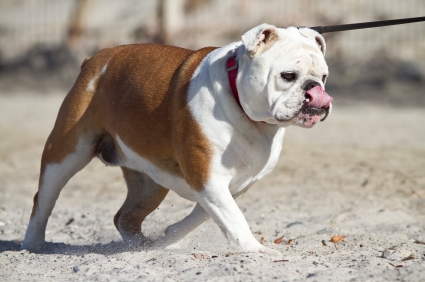
It's not 'just a Bulldog', if you cannot feel the ribs, if there is no waist and no tuck up from the side. It's fat. It can't breathe, it overheats faster... your dog is fat.

It's not a snuggly Labrador if it has a giant pocket of fat over its shoulders and in front by its chest. It puts strain on its joints, leading to faster hip degeneration and earlier old age problems. Your dog is fat.

It's not a cute Pug with puggy rolls if it is cylindrical. I don't care what the breed standard says, or what your expectations are. I don't care if the vet tells you your dog is healthy, trust me, they've either gotten used to seeing fat, fat, fat walk through their door so much so that they only really note horrible obesity, or they're too scared to tell you. Your dog is fat.
There's a secret behind all of this. You control all their food. Absolutely every bite that goes into that dog's mouth - it's on you. Your dog is fat... because you made it fat.
And the health problems that goes with a fat dog? It's on you too. Sore hips, faster arthritis, heart problems, overheating ... It's on you.
I'm sick of seeing dogs that are fat. Because it's on you. Because you're hurting your dog.
Food is not love. It's part of an expression of love, sure. But so much that you hurt them? That's not love.
I'll let you in on a secret - those images? I just googled 'bulldog', 'labrador' and 'pug'. No qualifier. These are what we think these dogs should look like. And you know what? They're all too fat.
Enough with this.
Put your hands on your dog. Can you feel their ribs, easily, like you can feel the bones on the back of your hand? Good - your dog is not fat. But you can't, can you?
Look at your dog. Can you see a waist? A nice tuck up from the side? Good, your dog is not fat... but again, this is not what you see, is it?
Your dog is fat... and it's on you.
It's not something we like to talk about. But it's time.
Your dog, it's fat.
It's not 'just a Bulldog', if you cannot feel the ribs, if there is no waist and no tuck up from the side. It's fat. It can't breathe, it overheats faster... your dog is fat.

It's not a snuggly Labrador if it has a giant pocket of fat over its shoulders and in front by its chest. It puts strain on its joints, leading to faster hip degeneration and earlier old age problems. Your dog is fat.

It's not a cute Pug with puggy rolls if it is cylindrical. I don't care what the breed standard says, or what your expectations are. I don't care if the vet tells you your dog is healthy, trust me, they've either gotten used to seeing fat, fat, fat walk through their door so much so that they only really note horrible obesity, or they're too scared to tell you. Your dog is fat.
There's a secret behind all of this. You control all their food. Absolutely every bite that goes into that dog's mouth - it's on you. Your dog is fat... because you made it fat.
And the health problems that goes with a fat dog? It's on you too. Sore hips, faster arthritis, heart problems, overheating ... It's on you.
I'm sick of seeing dogs that are fat. Because it's on you. Because you're hurting your dog.
Food is not love. It's part of an expression of love, sure. But so much that you hurt them? That's not love.
I'll let you in on a secret - those images? I just googled 'bulldog', 'labrador' and 'pug'. No qualifier. These are what we think these dogs should look like. And you know what? They're all too fat.
Enough with this.
Put your hands on your dog. Can you feel their ribs, easily, like you can feel the bones on the back of your hand? Good - your dog is not fat. But you can't, can you?
Look at your dog. Can you see a waist? A nice tuck up from the side? Good, your dog is not fat... but again, this is not what you see, is it?
Your dog is fat... and it's on you.
Friday, 10 October 2014
On rituals and familiarity
whee... anthropology post time. If you're looking for doggy things, move along.
Rituals are peculiar things. On the one hand, they can be extremely mundane. Brushing your teeth, for example, is a thing that, aside from a practical function, for many persons serve as the preparation for sleep, or relaxation, or make them ready for the start of their day. I'm oversimplifying, but yeah, brushing your teeth is pretty much as mundane as it gets, yet it can be considered a ritual. On the other hand, you get the large, society-organising, mind shifting, world altering rituals. This is the inauguration of a president, or the human sacrifice that marks the end of one era and the beginning of the next in many South American societies. The removal of a heart and the resulting death of a person is considered pretty foreign to our understanding of the world, and is seriously overdramatised and made into a spectacle by Hollywood (Indiana Jones and the Temple of Doom, anyone?).
Yet, just this morning, I attended such a ritual. It was a brain, and not a heart, but I feel like I'm splitting hairs in this case. Let me describe it to you:
Before the brain-ritual can begin, the ceremonial priests undergo extensive preparation. They are ritually clothed in garb that is never present outside of these rituals. The garb is loose, unflattering clothing that would be closest to sleepwear, and would accordingly be considered inappropriate to wear anywhere else. The garb is usually all of one colour, green, blue or white being typical, though brown is not unheard of. They cover their feet in special coverings in order to keep the outside world and all of its contaminating elements out of the ritual space, and also to keep the ritual space separate from the everyday, outside world. These are not shoes, and would not provide any protection to their feet from physical dangers like thorns or stones - they serve no purpose aside from maintaining and isolating the purity of the ritual space in this society. They also cover their heads in a similar manner to the way they cover their feet. This masks any hairstyle they may be wearing. In fact, the ceremonial garb seems to deliberately depersonalise the ceremonial priest - he or she is merely a symbol of being someone with the knowledge and necessary training to carry out this ritual, and his or her individuality is entirely irrelevant to the situation.
Once appropriately garbed and hooded, they proceed to clense their hands. They have special liquids that they apply and a strictly ritualised manner in which they apply this liquid. This is considered so important that even though the ritual is very harmful to their skin, over time resulting in very dry, cracked skin that can be fairly painful to live with, they do this every time and with great precision. Special circular motions and interlocking of finger digits are concluded by a long and careful rinsing process. Once done, these hands may now not touch anything in the ordinary, everyday world. They are carefully covered in purpose made gloves, gloves which are typically also worn only during rituals such as these.
I, as an observer occupying that peculiar space between a knowledgeable person and a layperson, was allowed to observe this process through a special screen. My knowledge comes from my experience as an anthropologist, but does not grant me the privileges of a fully fledged initiate into the ceremonial priesthood - something which takes roughly ten years to achieve, though initiates start practicing this ceremony from their second or third year.
The priest enters the ceremonial area, and finds a human brain laid out on an altar for him. Priests are often male, though women are not excluded from becoming such priests. The brain has been carefully prepared by initiates. The skull was carefully sawed open, the brain stem severed, and the brain itself anointed, oiled and perfumed to make it into a ceremonial object. On special side-tables alongside the altar are various implements. A long bladed knife, various hooks and pins, and an assortment of what looks to be tweezers are laid out in neat rows. These implements, like the tables and altar, have all been ritually heated and anointed with alcoholic substances in preparation.
The brain is ritually sourced. Sometimes, a person willingly donates their body for this kind of ritual dismemberment. This is quite rare, though, and is socially a little frowned upon. More usually, the brain is taken from someone killed violently, often by the rapid impact of a big object to their body at high speed. This body is then not claimed or identified by anyone, which signals its availability for use in this ritual. Often, these bodies come from the least of society, the poorest, those with few social connections, people who will not be missed.
For the next hour or more, I truly lost track of time, the priest spoke a special language as he carefully cut the brain into ever smaller pieces, sometimes following along with the curved grey matter, at other times cutting through it. The special language is never spoken outside of the ritual context or the training therefore, lest it lose its power. It is made up of ancient languages of people that the priests consider their forebears, even though it is nearly impossible that they are actually genetically related to people who spoke those languages thousands of years ago. As he speaks, he names each piece of the brain with a word of power, that imbues that section with meaning and power that is only meaningful and powerful to the initiates of the priesthood, but that nonetheless leave the audience with a sense of awe and power.
The ritual is repeated, again and again, with no purpose outside of naming the parts and practicing the skills needed to perform the ritual itself.
Finally, the ritual concludes with clapping of hands as a show of appreciation for the work done by the priest, and much admiration is expressed for the straightness of his cuts and his ability to remember and recite the ceremonial names of each part.
What I was in fact watching was not some obscure tribal ritual, but a dissection of a brain by an anatomy expert. This ritual, that I have made seem somewhat strange, is in fact a perfectly ordinary teaching tool for making doctors and neuro-scientists - highly valued and powerful experts in their own context.
Why did I make this seem so strange? Anthropology typically seeks to make the strange seem normal. In that way, it is a very powerful tool with which to fight prejudice (witchcraft is not foolish or superstition, in fact, it explains unfortunate events quite well, and even gives you some sense of control over them - see this PDF article by Evans Pritchard). But in an interesting twist of fighting prejudice, anthropology can also make the normal seem strange, by couching it in the narrative style usually reserved for practices we would find abnormal, worthy of condemnation. I'm not trying to say that dissections are worthy of condemnation, definitely not. I am trying to point out how very weird our medical science is. How very powerful our doctors and other medical people are, that they can take body parts from people and display them, anonymously and with great ceremony, to other experts.
These body parts, depersonalised, unnamed, disconnected from a person, is entirely foreign to nearly anyone's experience after dying - most are carefully placed in caskets, celebrated and buried, with a marker indicating who they were and how long they lived. If the cadaver was donated, there may well be such a marker for the person, but donations are rare (and no wonder). Part of the reason for this rarity, is of course, a culturally-mediated conviction that bodies must be whole to be able to be resurrected upon the return of the messiah, but part of it is also that few people want to be made into such a specimen after death. Mostly, it's an unnamed and unclaimed corpse as a result of a road accident (which we have way too many of). The end of that corpse is being burned up with medical waste in a fire, or at best, remaining forever more in a jar of formaldehyde.
Looking away from this spectacle once you've been invited in is frowned upon as unscientific (I am such a charlatan, this sort of thing makes me very queasy). Being a person of science makes you one of the most powerful people in today's world - like the priests of the Christian medieval world, they literally decide what is true and what is not, what can, and cannot, be known, or acted upon, or changed.
I'm not trying to condemn. I'm trying to ask a question. Is this right? Is this fair? Is this, really, how we want to decide what is real, what is worth knowing and acting upon?
Person whose brain I saw dissected today, I'll remember you. If nothing else, I can do that much. I'll remember you as a human, who lived, laughed, cried, spoke and made a difference to those around you. You were more than an amygdala oblongata and a pons, more valuable than a list of terms. Your contribution to medical science may be questionable, but I hope you teach students what they need to learn to practice medicine, and that in their practice they heal people.
Subscribe to:
Posts (Atom)